
From Fishing Villages to Luxury Cruises | Halong & Lan Ha Bay
For centuries, Halong Bay and Lan Ha Bay have been more than spectacular landscapes of limestone islands and emerald-green water. They have been home, workplace, and cultural space for generations of coastal communities.
Long before luxury vessels appeared on the horizon, local fishermen lived closely connected to the sea. Floating houses, fishing boats, nets, and small family communities were once an essential part of everyday life.
Today, visitors see a very different picture. Modern cruise ships sail between towering limestone formations, offering comfortable cabins, restaurants, swimming pools, spas, kayaking excursions, and carefully designed itineraries.
Yet beneath this transformation lies an important story: the changing relationship between people, tourism, and the sea.
Exploring Halong Bay and Lan Ha Bay today is therefore not simply about taking a luxury cruise. It is also an opportunity to understand how coastal life in northern Vietnam has evolved.
Life Before Mass Tourism: The Fishing Villages of Halong Bay
Before Halong Bay became one of Vietnam’s most famous tourism destinations, fishing was central to local life.
Communities lived directly on or beside the water, adapting their daily routines to tides, weather, and the seasons. Fishermen relied on traditional techniques to catch fish, squid, shellfish, and other marine resources.
Floating villages became distinctive features of the bay.
Homes were constructed on floating platforms, while boats served as transportation, fishing equipment, and sometimes family businesses. Children grew up surrounded by the sea, learning maritime skills from their parents and grandparents.
These communities developed a lifestyle that was remarkably different from life on the mainland.
The sea was not simply scenery. It was their livelihood, their home, and an important part of their cultural identity.
The Traditional Rhythm of Life on the Water
Life in the fishing villages followed the rhythm of nature.
Fishermen often began working before sunrise, heading out into the calm waters while the limestone islands gradually emerged from the morning mist.
The day’s activities depended heavily on weather conditions. Strong winds, storms, changing tides, and seasonal patterns could determine whether fishing was successful.
At the end of the day, families returned to their floating homes, sorting their catch and preparing meals.
This simple lifestyle created a strong sense of community.
Neighbors helped each other during difficult weather, shared knowledge about fishing grounds, and passed traditions from one generation to the next.
For visitors today, these stories provide a fascinating perspective on Halong Bay that cannot be captured by photographs alone.
The Rise of Tourism in Halong Bay
The transformation accelerated as Halong Bay became increasingly popular with domestic and international travelers.
As tourism infrastructure developed, visitors began arriving not only to admire the landscape but also to experience the bay from the water.
Cruising gradually became one of the most popular ways to explore the region.
Traditional wooden boats were followed by larger tourist vessels, and eventually by sophisticated overnight cruise ships offering hotel-style accommodation.
This evolution changed the economic landscape around Halong Bay.
Tourism created new opportunities in hospitality, transportation, restaurants, guiding, cruise operations, and other service industries.
For many local families, tourism offered an alternative to traditional fishing.
From Fishing Boats to Luxury Cruise Ships
One of the most visible symbols of this transformation is the modern cruise industry.
Today’s travelers can wake up in a private cabin surrounded by limestone islands, enjoy breakfast overlooking the bay, join a kayaking excursion, and finish the day with dinner on board.
The contrast with the traditional fishing lifestyle is remarkable.
Instead of depending entirely on the sea for food and income, many people now work in industries connected to tourism.
Cruise companies employ local residents as chefs, cabin attendants, tour guides, sailors, drivers, and hospitality professionals.
This has helped create a more diverse coastal economy while connecting Halong Bay with international tourism markets.
Lan Ha Bay: A New Chapter in the Cruise Experience
While Halong Bay became famous earlier, Lan Ha Bay has emerged as another major destination for travelers seeking a more tranquil cruise experience.
Located near Cat Ba Island, Lan Ha Bay features hundreds of limestone islands and islets, secluded beaches, hidden lagoons, and calm waters.
Its natural environment makes it particularly suitable for activities such as kayaking, swimming, cycling, and exploring less-developed coastal areas.
The growth of cruise tourism in Lan Ha Bay has brought another wave of economic change.
Local communities increasingly participate in tourism-related services, while cruise operators develop itineraries designed around both nature and cultural experiences.
The result is a destination where traditional coastal heritage and modern hospitality increasingly exist side by side.
How Luxury Cruises Are Changing Local Communities
The rise of luxury cruises has brought significant economic opportunities.
Tourism generates demand for food suppliers, transportation providers, fishermen, local guides, maintenance workers, and hospitality staff.
Many products served on cruise ships can also come from nearby communities, creating links between tourism and local agriculture or fisheries.
At the same time, the transition requires careful management.
Rapid tourism growth can put pressure on marine ecosystems, waste-management systems, water quality, and coastal communities.
This is why the future of Halong Bay and Lan Ha Bay depends not simply on attracting more visitors, but on developing responsible and sustainable tourism.
Halong Peony Cruises and the Modern Way to Experience the Bay
For travelers who want to experience the modern side of the region, halong peony cruises represent the evolution of overnight cruising in Halong Bay and Lan Ha Bay.
The appeal of a modern cruise is not only its comfort. It is the ability to experience the landscape while remaining connected to the environment surrounding the vessel.
A well-designed cruise can combine accommodation, dining, sightseeing, kayaking, swimming, and cultural experiences into a single journey.
For international visitors, this creates an interesting contrast.
A traveler can enjoy contemporary hospitality inside a luxury cabin while looking outside at landscapes that have remained recognizable for centuries.
That contrast is one of the most fascinating aspects of cruising in northern Vietnam.
From Floating Homes to Floating Hotels
Perhaps nowhere is the transformation more visible than on the water itself.
Once dominated by small fishing boats and floating homes, parts of Halong Bay and Lan Ha Bay are now frequented by sophisticated cruise vessels.
The function of the boat has changed dramatically.
For traditional communities, a boat was primarily a tool for survival.
For modern travelers, a cruise ship is a place for relaxation, discovery, and leisure.
However, the sea remains the common connection.
Both lifestyles depend on the same waters, the same weather patterns, and the same extraordinary landscape.
This makes the evolution of cruising more than a tourism story. It is also a story about how people adapt to changing economic opportunities.
What Happened to the Traditional Fishing Villages?
As tourism developed and environmental management policies evolved, some traditional floating communities were relocated to the mainland or encouraged to change their livelihoods.
The reasons were complex.
Authorities and local organizations have worked to improve living conditions, provide access to education and healthcare, and reduce environmental pressures caused by floating settlements.
For former fishing families, the transition has meant learning new skills and finding new sources of income.
Some have moved into tourism-related jobs, while others have developed businesses on land.
Although the traditional floating-village lifestyle has become less common, its cultural importance remains.
Preserving the Memory of Coastal Life
The disappearance or transformation of traditional fishing communities does not mean their culture should disappear.
Their stories remain an important part of the identity of Halong Bay and Lan Ha Bay.
Visitors can learn about traditional fishing techniques, local cuisine, marine culture, and the history of coastal communities through cultural excursions and responsible tourism experiences.
Cruise operators also have an opportunity to incorporate these stories into their itineraries.
When tourism tells the story of the destination rather than simply selling its scenery, travelers gain a deeper understanding of what they are seeing.
Sustainability: The Next Stage of Transformation
The next chapter in the history of Halong Bay and Lan Ha Bay will be defined by sustainability.
As visitor numbers grow, cruise operators and local authorities face the challenge of protecting fragile marine and coastal ecosystems.
Modern cruising increasingly focuses on measures such as waste management, reducing plastic use, improving fuel efficiency, protecting marine habitats, and encouraging responsible visitor behavior.
Travelers also play an important role.
Simple actions—avoiding single-use plastics, respecting wildlife, not leaving waste behind, and following kayaking or swimming guidelines—can help protect the destination.
The goal should not be to stop tourism.
Instead, the goal is to create a model where tourism supports local communities while preserving the environment that attracts visitors in the first place.
Why the Transformation Matters to Travelers
Understanding the history of Halong Bay and Lan Ha Bay changes the way travelers experience them.
A limestone island is no longer just a beautiful photograph.
A traditional fishing boat is not simply part of the scenery.
A modern cruise ship represents decades of economic and social change.
When visitors understand this context, a cruise becomes more meaningful.
They are not only traveling through one of Vietnam’s most beautiful landscapes. They are witnessing the meeting point between traditional coastal culture and modern tourism.
Halong Bay and Lan Ha Bay: A Destination Between Past and Future
The story of Halong Bay and Lan Ha Bay is one of transformation.
Fishing villages have gradually given way to modern communities. Small boats share the waterways with luxury cruise ships. Traditional livelihoods increasingly coexist with hospitality and tourism.
Yet the essential character of the destination remains connected to the sea.
The limestone islands, quiet lagoons, fishing traditions, and coastal culture continue to shape the identity of the region.
For travelers, this makes a cruise through Halong Bay or Lan Ha Bay more than a sightseeing trip.
It is a journey through a living landscape—one where the past and future can still be seen from the same deck.
From traditional fishing villages to sophisticated overnight cruises, Halong Bay and Lan Ha Bay have experienced extraordinary change.
Tourism has created new opportunities for local communities while also creating new responsibilities for protecting the environment.
The challenge for the future is to ensure that luxury and sustainability can develop together.
For travelers choosing halong peony cruises, the experience can therefore be more than a comfortable journey through Vietnam’s iconic limestone seascape.
It can be an opportunity to discover how people have lived with the sea, how coastal communities have adapted to change, and why protecting Halong Bay and Lan Ha Bay matters for generations to come.
The landscape may look timeless—but the life surrounding it continues to evolve.
Other
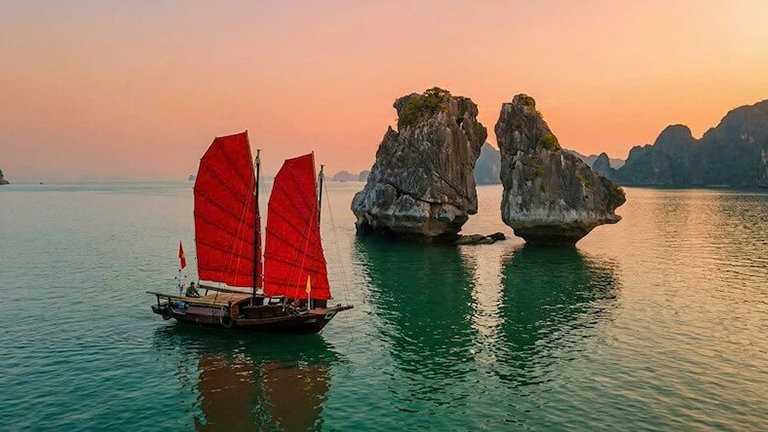 Halong Bay vs Lan Ha Bay in 2027: Which Is Better?
Compare Halong Bay vs Lan Ha Bay in 2027 by scenery, activities, cruise atmosphere, couples, families and travel styles to choose the right Vietnam cruise.
08/10/2026
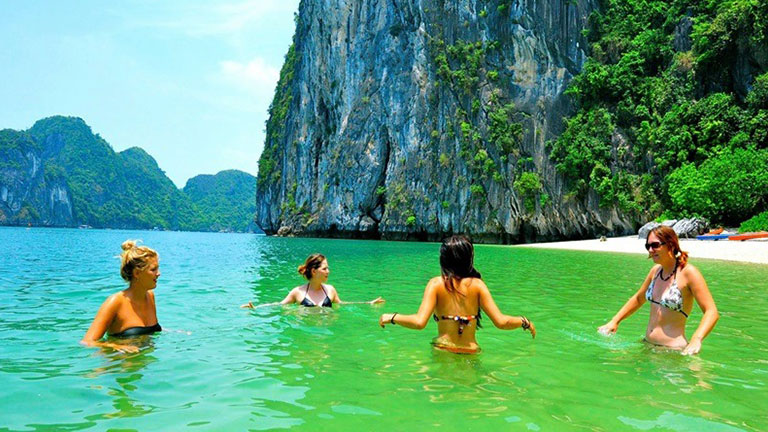 Halong Bay Cruise for Solo Travelers: What You Need to Know
Traveling alone can be one of the most rewarding ways to explore Vietnam. You can set your own schedule, spend more time taking photographs, meet fellow travelers, and enjoy quiet moments without...
30/09/2026
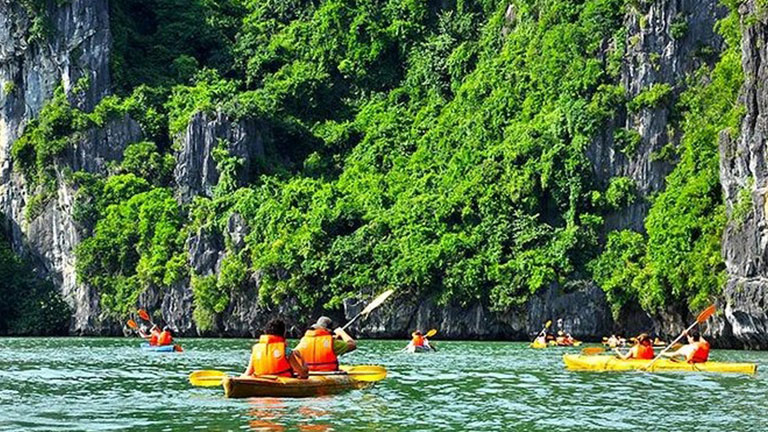 Halong Bay & Lan Ha Bay Cruises | Vietnam Travel Guide
Discover why Halong Bay and Lan Ha Bay cruises are the ultimate way to experience Vietnam’s natural wonders, with kayaking, caves, beaches and unforgettable scenery.
08/09/2026